The use of open government data is becoming increasingly important to drive the development of artificial intelligence (AI) applications in the public sector. Open government data is data collected by government agencies and made publicly available in a machine-readable format for anyone to use.
One of the main benefits of open government data is that it enables the development of new services and insights that can help government agencies make better decisions and provide more effective services to citizens. Austria too is providing open data on a dedicated platform for anyone and everyone to use. However, it is unclear exactly which use cases exist for AI applications and particularly machine learning applications in this context and what the provided data can be used for.
The aim of this summary paper is therefore, in a first step, to analyze which possible applications of open government data exist in Austria with regard to AI applications. In the course of this, any advantages, problems and research gaps should also be identified in order to actually use this open data in a follow-up project and to create an application from it.
1. Introduction
The use of artificial intelligence (AI) in the public sector has the potential to improve a wide range of services, from healthcare and education to transport and public safety. One area in which AI can be particularly effective is electronic government services (e-government), i.e. the use of digital technologies to improve government services and to increase citizen participation. Open government data (OGD), which has already been used in many areas for decades, can be applied here [1].
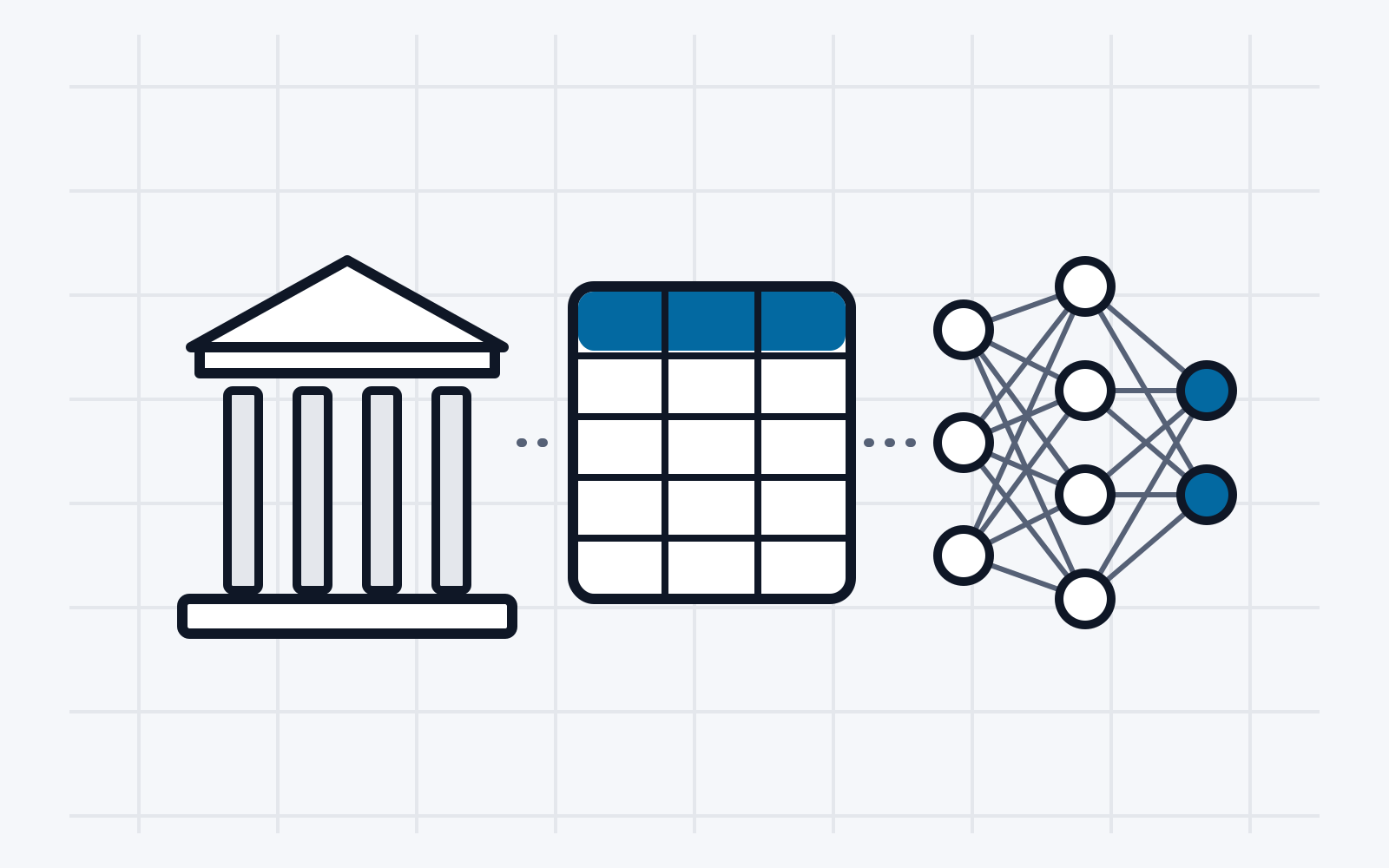
The use of open government data (OGD) in AI applications in particular enables the development of new services and insights that can help governments make better decisions and provide more effective services to citizens. This open data can be used, for example, to train machine learning models that predict patterns of criminal behaviour or identify areas where services are most urgently needed.
OGD is based on several principles that promote transparency, the exchange of government data and its use by the public. The key principles of OGD [2] include:
-
Accessibility: OGD data must be easily accessible to the public, in a format that is easy to understand and use.
-
Reusability: OGD data should be available for reuse and redistribution by the public without restrictions.
-
Interoperability: OGD data should be in a format that can easily be integrated with other datasets and systems.
-
Timeliness: OGD data should be made available as soon as possible after it has been collected.
-
Non-discrimination: OGD data should be available to all members of the public, regardless of their background or status.
-
Maintenance: OGD data should be updated and maintained regularly to ensure its accuracy and usefulness.
-
Licence-free: OGD data should be available without a specific licence, so that the data can be freely used, shared and redistributed.
-
Machine-readable: OGD should be in a format that machines can process, for example CSV, JSON or XML.
These principles are essential to ensure public access to, and meaningful use of, data produced and collected by public bodies, and to foster cooperation and innovation.
In Austria, the Re-use of Information Act (Informationsweiterverwendungsgesetz, IWG) [3] promotes transparency, the exchange of information and the use of open data by public authorities, and lays down rules for the re-use of this information. It ensures that the data collected by public authorities is made publicly available in a machine-readable format, so that entrepreneurs, researchers and other groups can use it to develop new services and insights. In this way, the public sector can make better use of the data it collects, which can ultimately lead to better services for citizens. However, in line with the Austrian AI strategy [4], it must be ensured that artificial intelligence and the data used are applied in accordance with European fundamental values, the European legal framework and fundamental and human rights, in particular data protection law.
The aim of this overview paper is therefore to give an overview of the possible applications of OGD in Austria with regard to AI applications and to point out any advantages and disadvantages.
2. Open Data Austria
The Cooperation Open Government Data (OGD) Österreich1 was founded in 2011 by the Federal Chancellery in collaboration with the cities of Vienna, Linz, Salzburg and Graz, in order to form the basis for open government data in Austria. The cooperation aims to promote the use and availability of open data and to act as a single point of contact to the European Data Portal. For this purpose, the platform data.gv.at2 emerged from this cooperation in 2012. The cooperation has set itself the goal of making government and publicly funded data more accessible to the public, with the aim of increasing transparency, participation and innovation [2]. This goal is pursued, among other things, through the following measures:
-
Lobbying for an open data policy at national and local level
-
Providing resources and training for individuals, organisations and government bodies on the use of open data
-
Organising events and other initiatives to promote the use of open data
-
Providing the platform data.gv.at for listing and sharing open datasets
The cooperation is convinced that, through more open and more easily accessible data, it can promote more transparency and accountability in public administration, involve the public in decision-making in a better-informed way, and support innovation and economic growth.
2.1. Available datasets
The Cooperation OGD Österreich works to make a wide range of data from government and public sources available to the public on data.gv.at. This includes data from areas such as:
-
Economic data, e.g. data on companies and their financial performance
-
Environmental data, e.g. measurements of air and water quality
-
Administrative data, e.g. data on government budgets and expenditure
-
Statistical data, such as demographic data, economic data and opinion polls
-
Transport data, e.g. information on timetables and routes of public transport
-
Geodata, e.g. maps and geographic information
-
Social and welfare data, e.g. data on healthcare, education and poverty
-
Data from scientific research.
It is worth noting that the specific datasets available via Open Data Austria may change over time and depend on the data provided to them by governments and other public organisations. They also ensure that the data is in a suitable format and well structured, so that it is easily accessible and usable.
Specifically, 41154 datasets are currently available, most of them in CSV format (35034 datasets), but other formats such as PDF (4453 datasets), JSON (668 datasets) or JPEG (268 datasets) are also provided. Most of the data (32669 datasets) is published by offenerhaushalt.at, which concerns municipal finances, but data from Nationalparks Austria (3325), Statistik Austria (386) or from the Austrian provincial capitals can also be found on the site. By far the largest category is economy and finance with 33994 datasets, but environmental data (4438), data on government and public administration (1121 datasets), regions and cities (1045 datasets) or population and society (913 datasets) are also provided. Comparatively few datasets exist in the areas of science and technology (3), energy (2), justice and laws (2), education and research (1), health (1) or society and social affairs (1).
2.2. Use cases for open data
Data.gv.at is the central data portal of the Republic of Austria, provided by Open Data Austria, on which, as already mentioned, a large number of datasets provided by the various levels of government, municipalities and public bodies are made available to the public. These datasets could be useful in several ways for the development of valuable AI applications for the public sector:
-
Predictive modelling: Data from data.gv.at can be used to train machine learning models to make accurate predictions about future events such as traffic patterns, crime rates and natural disasters.
-
Optimisation: AI can be used to optimise a wide range of public services, e.g. transport networks, emergency systems and energy distribution networks.
-
Analysis: AI can also be used to analyse data from data.gv.at in order to identify patterns, trends and insights that can inform public policy and decision-making.
-
Chatbots and virtual assistants: The data from data.gv.at can be used to develop conversational systems such as chatbots and virtual assistants that give the public quick and easy access to government services and information.
-
Visualisation: The data can be used to create interactive visualisations, dashboards and GIS tools that provide an overview of the data and make access and understanding easier for citizens.
-
Monitoring: The data can be used to monitor the performance of public services, identify bottlenecks and improve the quality of services.
These are only a few examples of possible use cases, whose success, however, depends on the accuracy of the data provided. The more accurate and reliable the data, the more efficient and effective the application based on this data.
2.3. Possible bias in the data
The data from data.gv.at can, like any other data source, contain bias. Such bias can arise from a number of factors, such as the way the data is collected, the way it is processed and cleaned, and the way it is presented. There are several types of bias that can occur in data, including:
-
Selection bias: This occurs when the data sample used is not representative of the population. If the data was collected only in certain areas or from certain groups of people, for example, it may not represent the population as a whole.
-
Measurement bias: This occurs when the data is collected using methods that are not accurate or reliable. If, for example, the survey questions are not well designed or if data is collected with instruments that are not properly calibrated, this can lead to distortions in the data.
-
Evaluation bias: This occurs when data is interpreted in a way that confirms preconceived opinions or hypotheses. If a researcher wants to prove a certain theory and selects only data that supports it, for example, this can lead to a distortion of the data.
-
Labelling bias: This occurs when data is labelled in a way that is not neutral or objective. If data is labelled with subjective terms, for example, this can lead to distortions in the data.
The data from data.gv.at may also contain bias, which is why clear information is provided on how the data was collected, processed and validated. Nevertheless, it is always important to check and verify the data before using it and to take possible bias into account.
3. Technical details
The open data portal of the Austrian federal government, data.gv.at, provides access via an application programming interface (API) to various datasets that are freely available or licensed under Creative Commons Attribution 4.0 International. To use the data from data.gv.at with an API, the following general steps are necessary:
-
Browse the website data.gv.at and find the desired dataset.
-
Besides the option to download the data in the available format, the dataset page also offers an API link to all metadata.
-
This API endpoint can be used to send requests to retrieve the data. An additional API key or other authentication data may be required to access the data.
Here is an example of using the requests library in Python to send a request to an API endpoint and retrieve the data:
import requests
api_endpoint = "https://data.gv.at/katalog/api/3/action/package_show?id=<dataset_id>"

response = requests.get(api_endpoint)
data = response.json()
print(data)
In this example, <dataset_id> should be replaced by the unique identifier of the dataset to be retrieved. Once the response variable contains the data, it is possible to access and work with the data fields using the JSON format. More detailed descriptions of how to use the data can be found in the interface definition [5].
In addition to the API interface, data.gv.at also provides a link to applications that were created using the open data. In total, there are currently 701 applications, which are divided into the following areas:
-
Visualisation (276)
-
Web app (243)
-
Mobile app (237)
-
Data preparation tool (105)
-
Concept (37)
-
Scientific publication (21)
-
Participation (19)
-
Tutorial (12)
-
Tool (10)
Registering a new application is simple and straightforward using a dedicated form3.
4. Conclusion
This overview paper has outlined ways of using open government data in Austria for concrete use cases that benefit the public sector, and has given technical details for doing so. Such use cases include, for example, that open data can be used to train machine learning models that predict crime patterns or identify areas where services are most urgently needed. A further advantage of open government data is that it promotes transparency and accountability by making it easier for citizens and organisations to access information about government activities and policies. In addition, third parties can build on existing services and improve them, which may open up new business opportunities.
In summary, the use of open government data for AI applications in the public sector is of crucial importance, as it provides a large amount of valuable data that can be used to train AI models, to improve decision-making, to promote transparency and accountability and to create new business opportunities. Open government data can also foster innovation, entrepreneurship and cooperation with the private sector, but care must be taken to ensure that no unintended bias is present.
Literature
[1] C. P. Geiger und J. von Lucke, „Open Government and (Linked) (Open) (Government) (Data)“, JeDEM, Jg. 4, Nr. 2, S. 265–278, 2012, doi: 10.29379/jedem.v4i2.143.
[2] G. Eibl, B. Lutz, P. Parycek und S. Pawel, Rahmenbedingungen für Open Government Data Plattformen. Verfügbar unter: https://neu.ref.wien.gv.at/at.gv.wien.reflive/documents/20189/68315/Rahmenbedingungen_f%25C3%25BCr_Open_Government_Data_Portale_1.3_fi n.pdf/51921bf6-cc0a-49c0-bc96-20fc23dcdfba.
[3] Bundesgesetz über die Weiterverwendung von Informationen öffentlicher Stellen, öffentlicher Unternehmen und von Forschungsdaten: Informationsweiterverwendungsgesetz 2022 – IWG 2022, 2022.
[4] BMK, Strategie der Bundesregierung für Künstliche Intelligenz. Artificial Intelligence Mission Austria. 2030.: (AIM AT 2030). [Online]. Verfügbar unter: https://www.bmdw.gv.at/Themen/Digitalisierung/Strategien/Kuenstliche-Intelligenz.html#:~:text=Um%20die%20Chancen%20von%20KI,(AIM%20AT%202030)%20entwickelt.
[5] David Zeilinger, Parlament OGD Schnittstellendokumentation. [Online]. Verfügbar unter: https://www.parlament.gv.at/ZUSD/PDF/Parlament_OGD_Schnittstellen-Dokumentation.pdf.