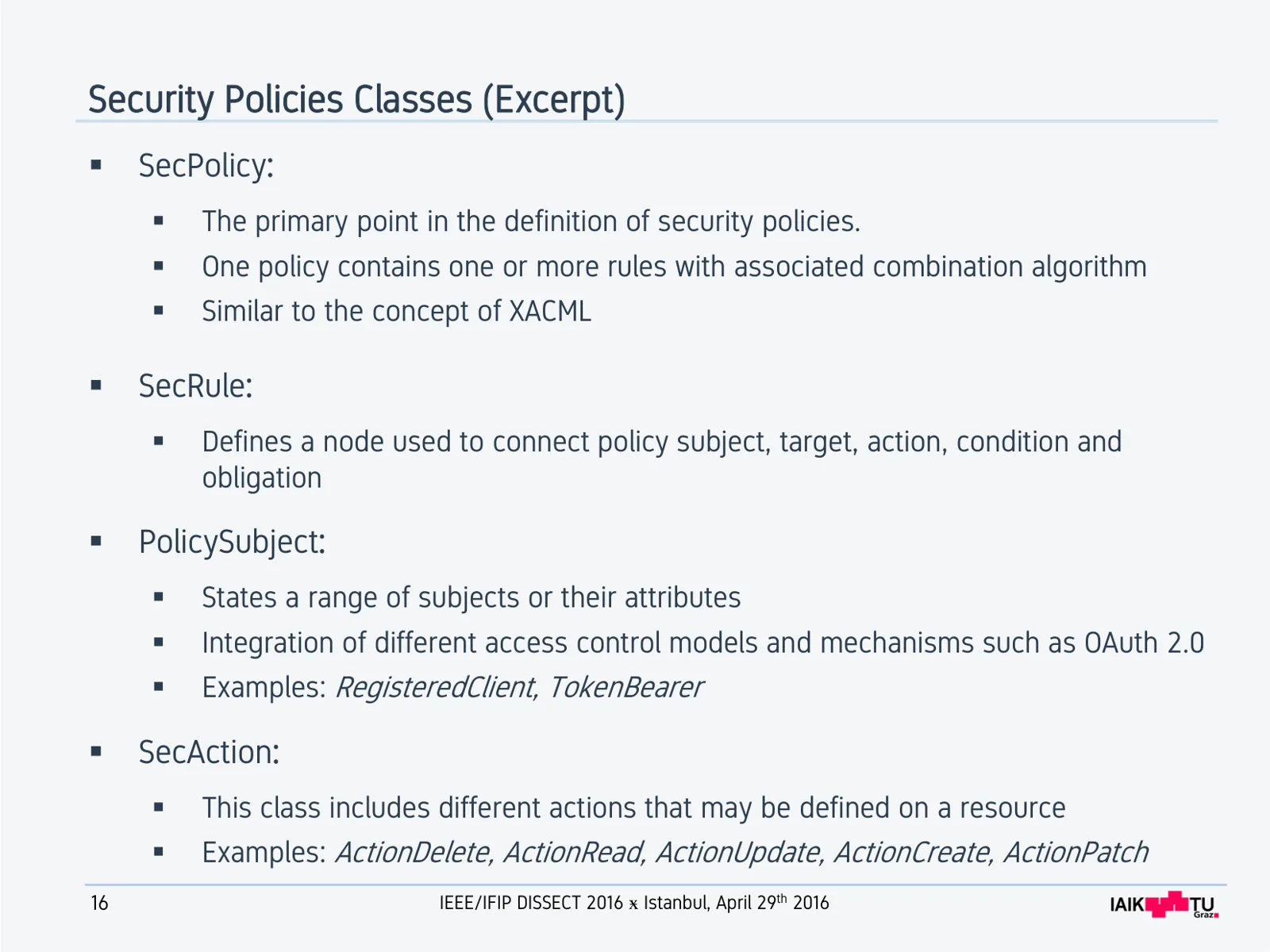
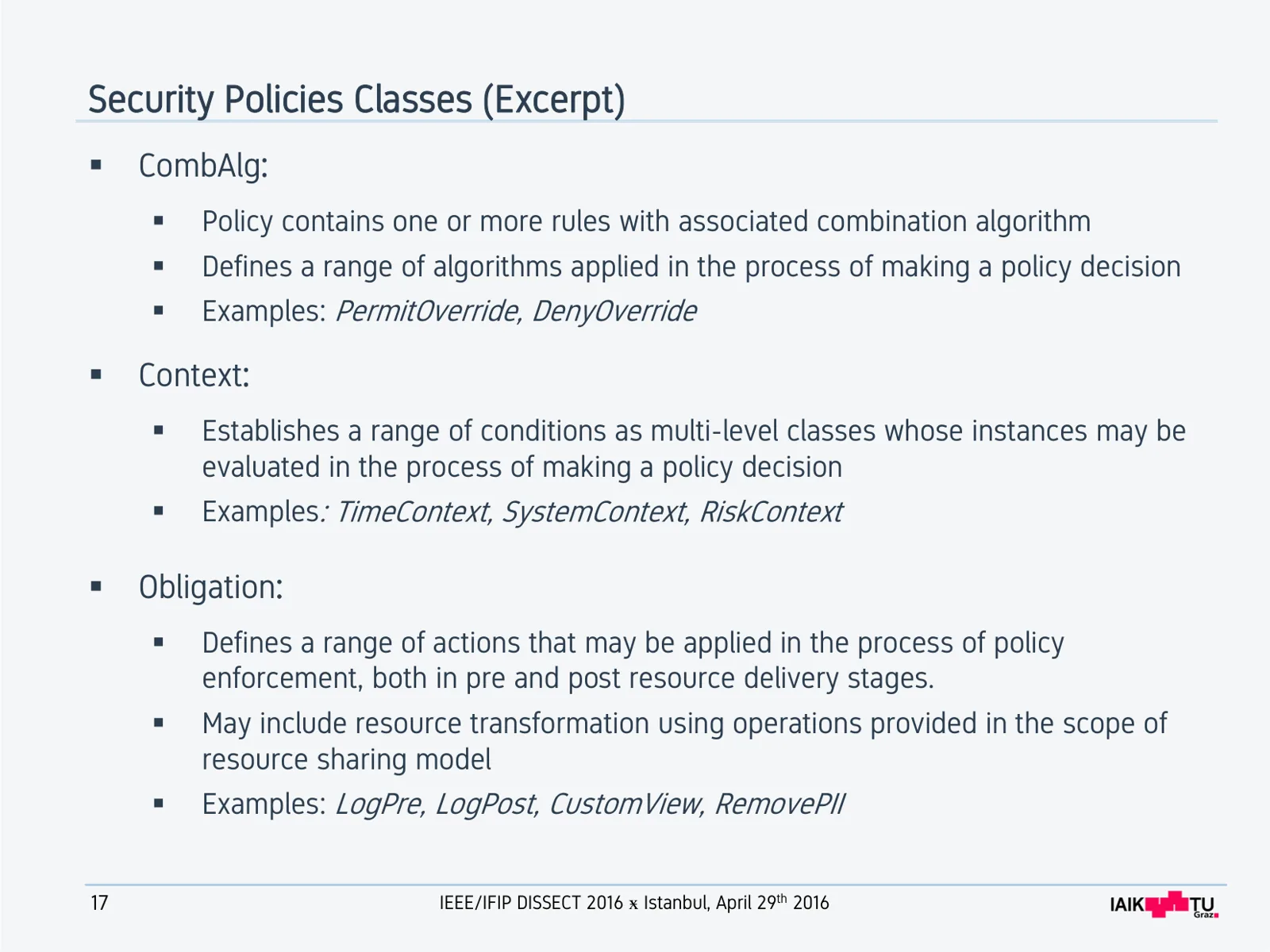
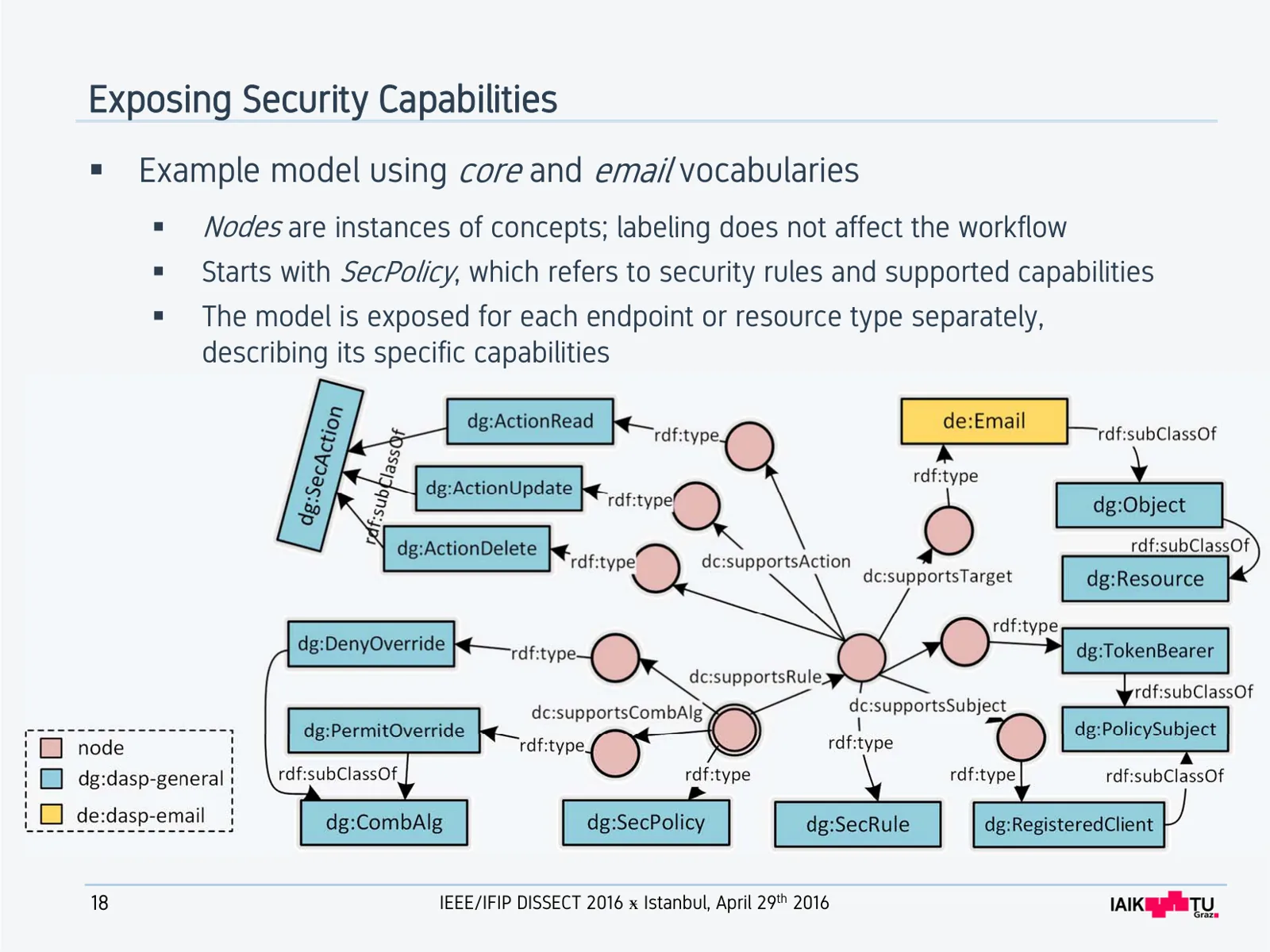
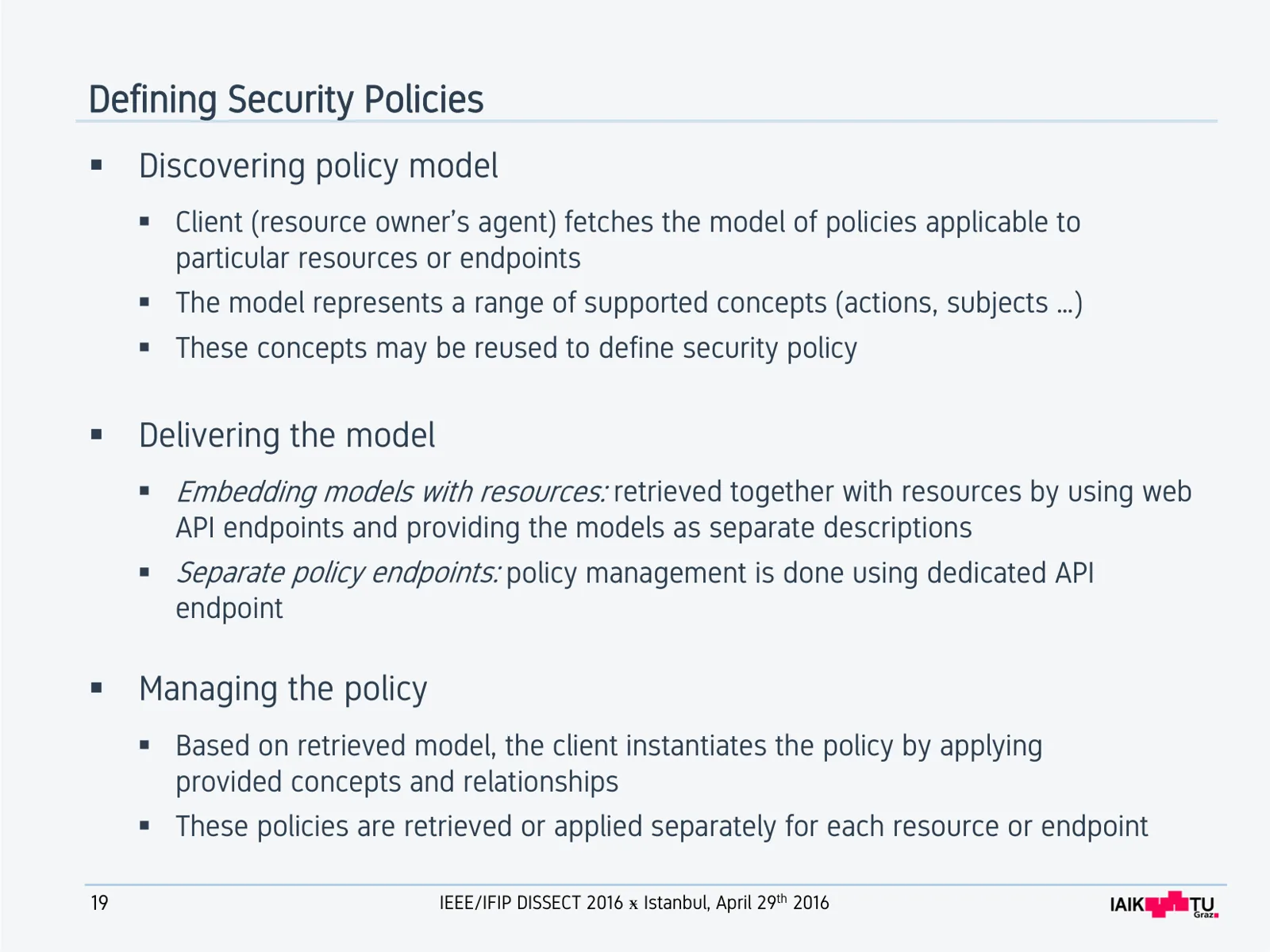
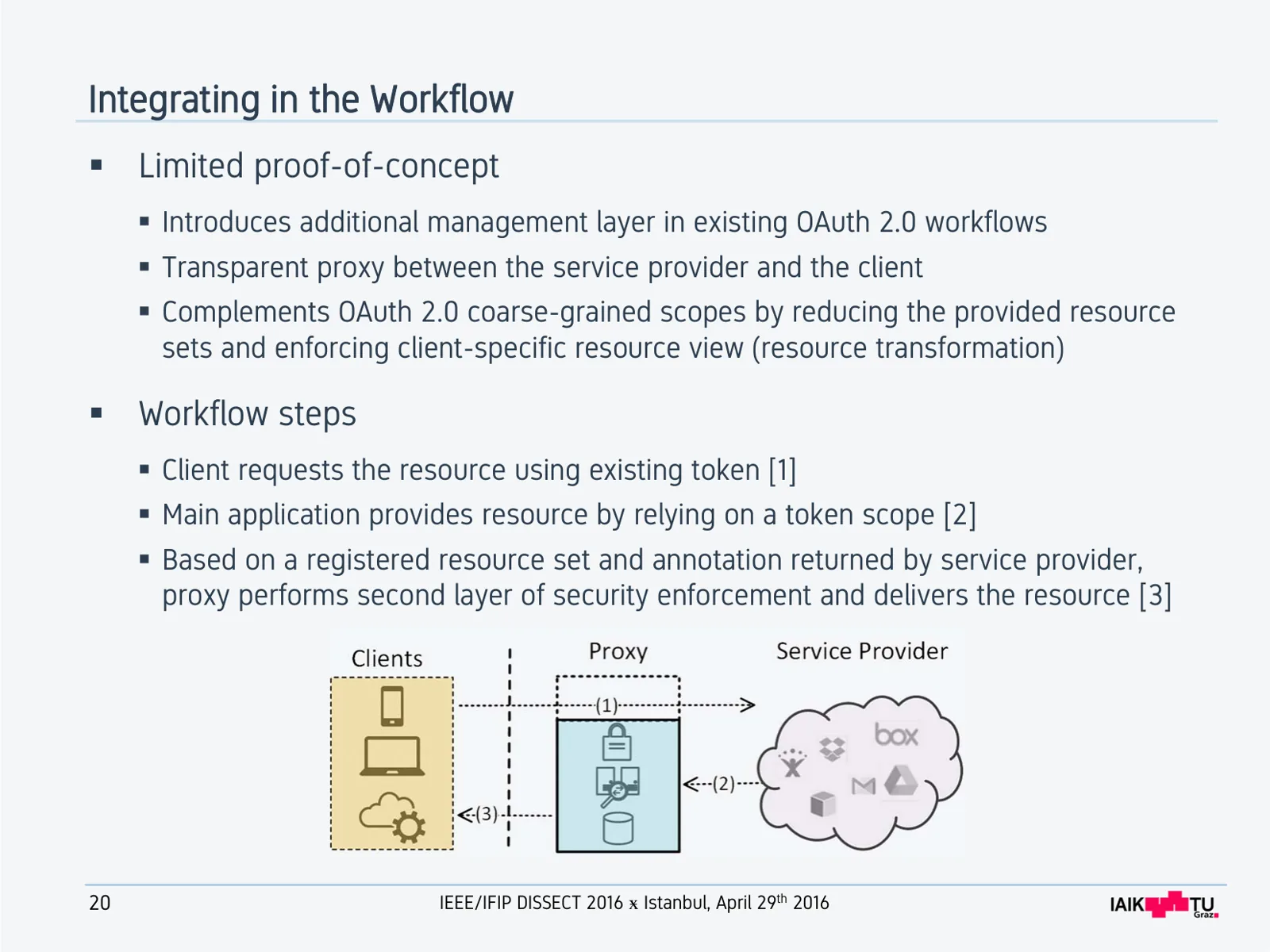
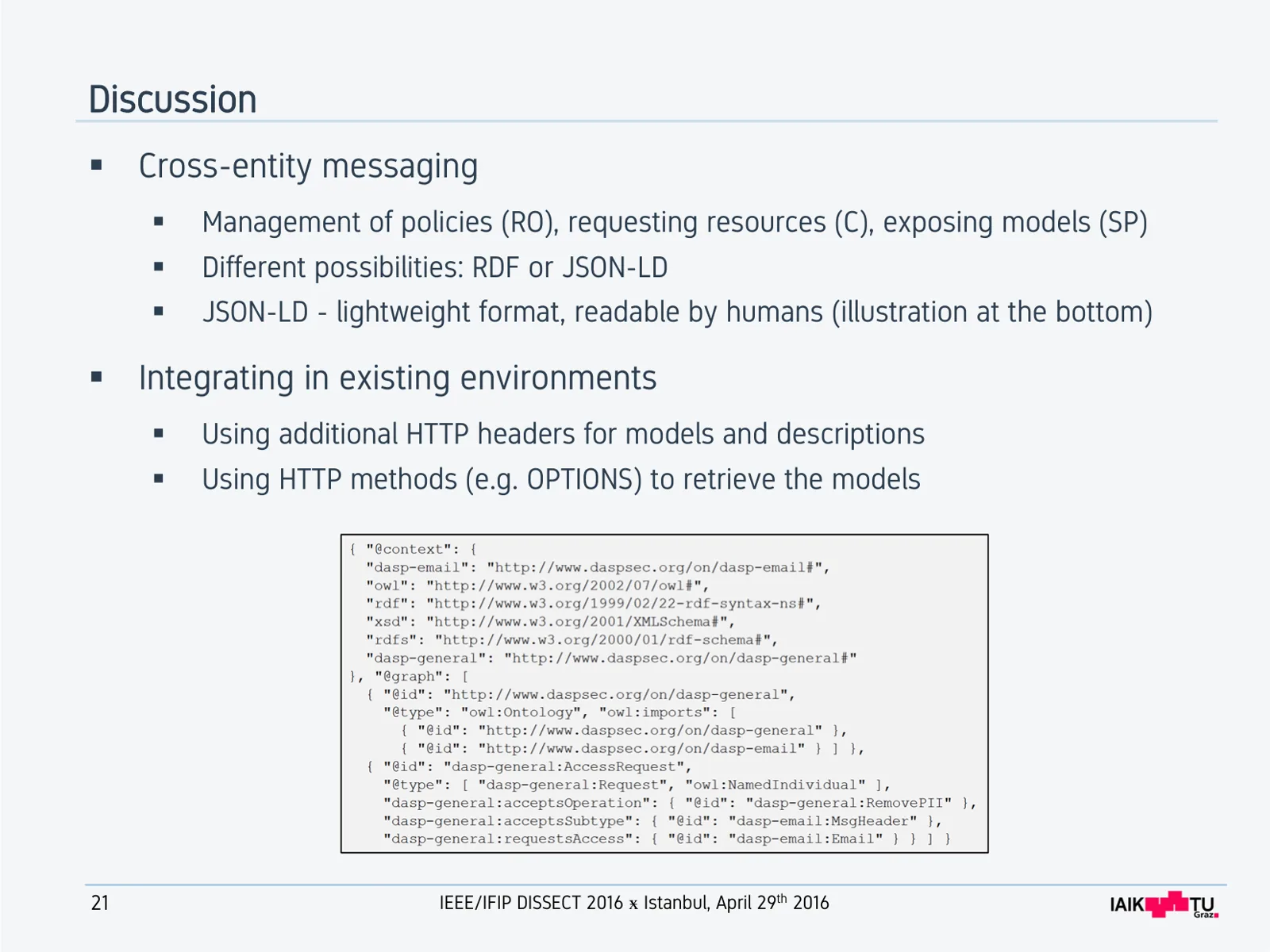
Security requirements, particularly those on confidentiality, require IT processes to be compliant to the least privilege principle. OAuth 2.0, a currently broadly adopted authorization protocol, meets these requirements only partially. For example, due to unilateraly defined and service provider specific representation of access scopes, the possibility to granulary and interoperably structure access restrictions and authorizations is virtually eliminated. This problem concerns in particular cross-domain data exchanges, as the security measures in different organizations can be applied only in limited extent.
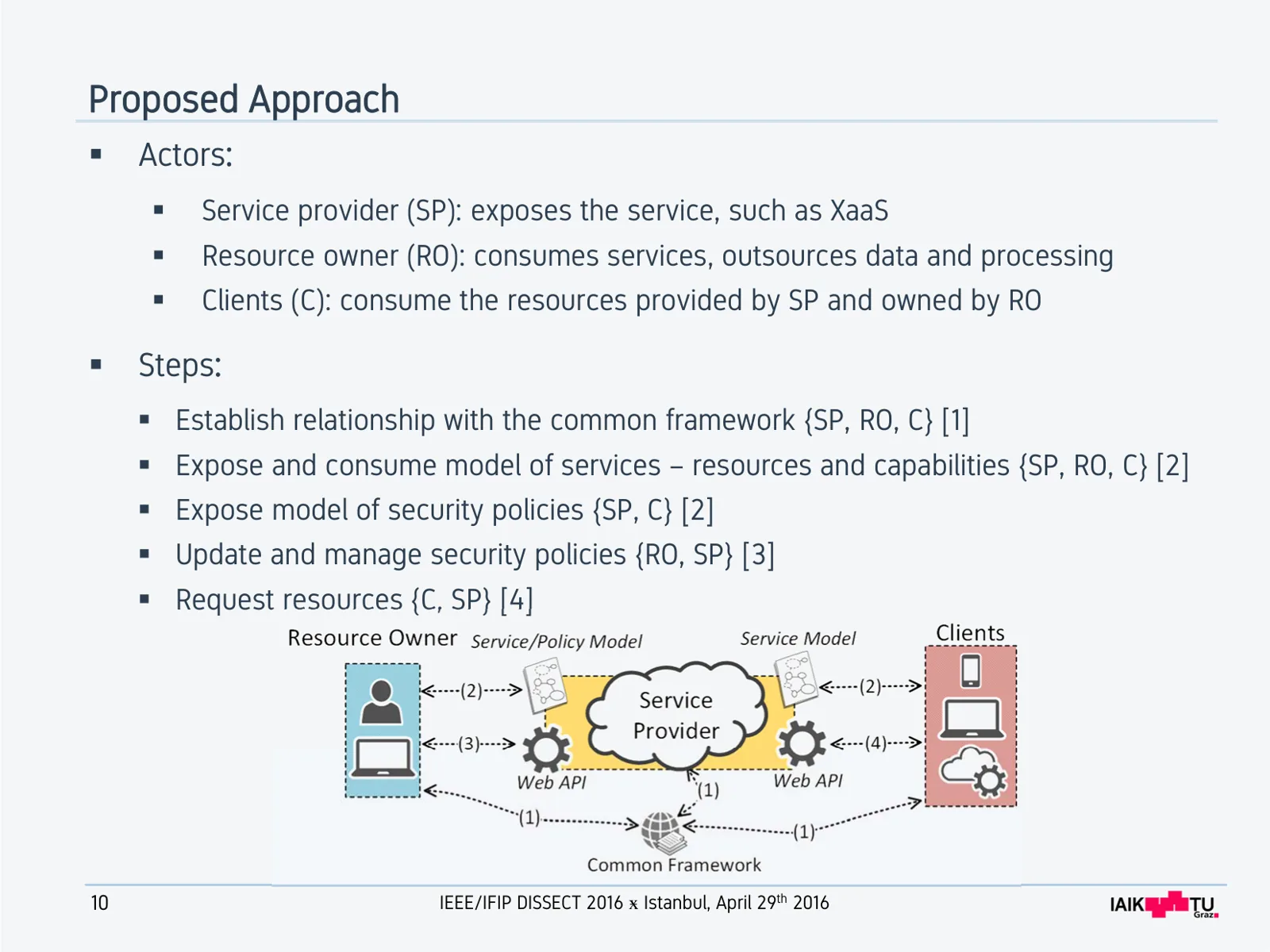
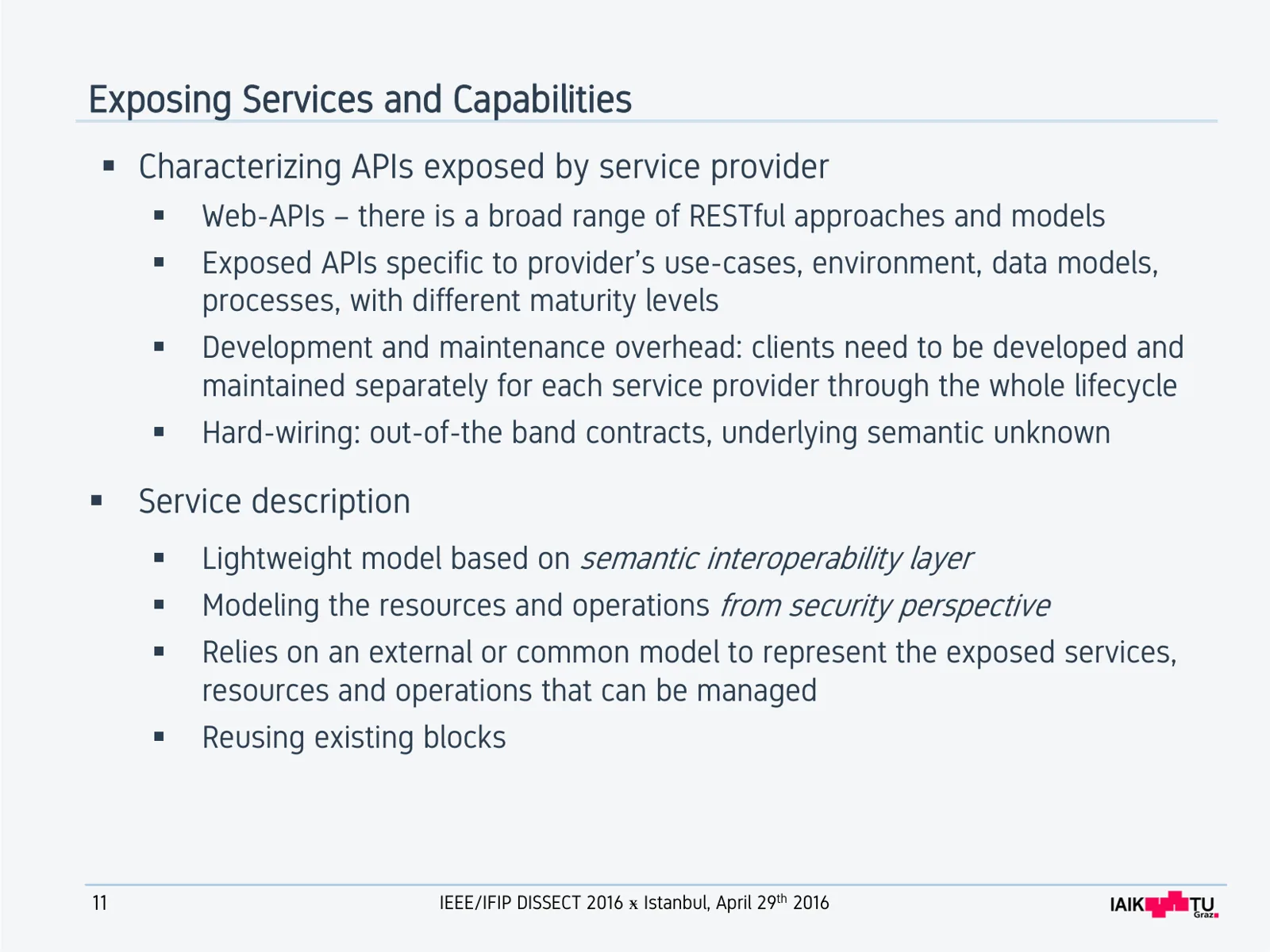
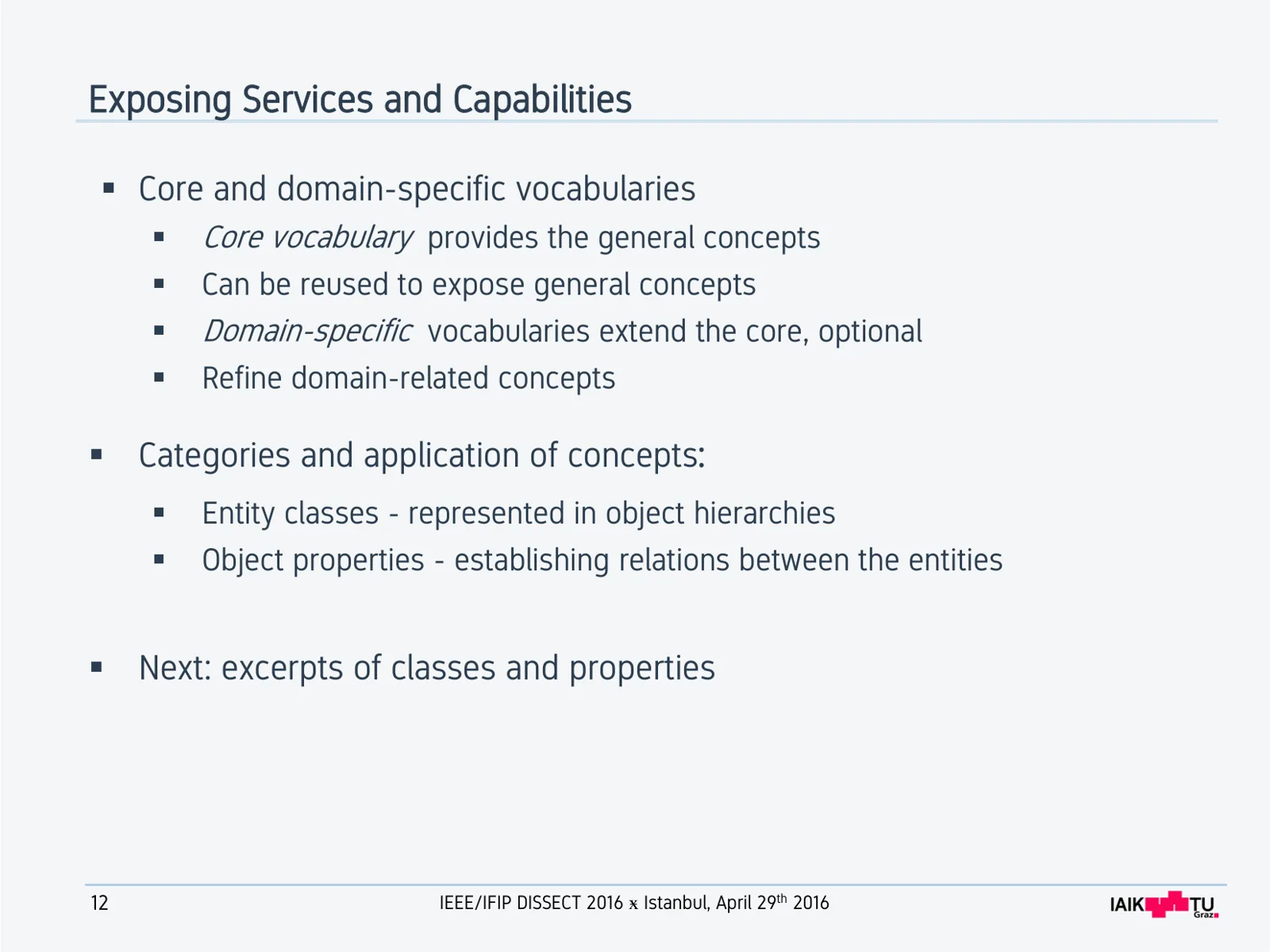
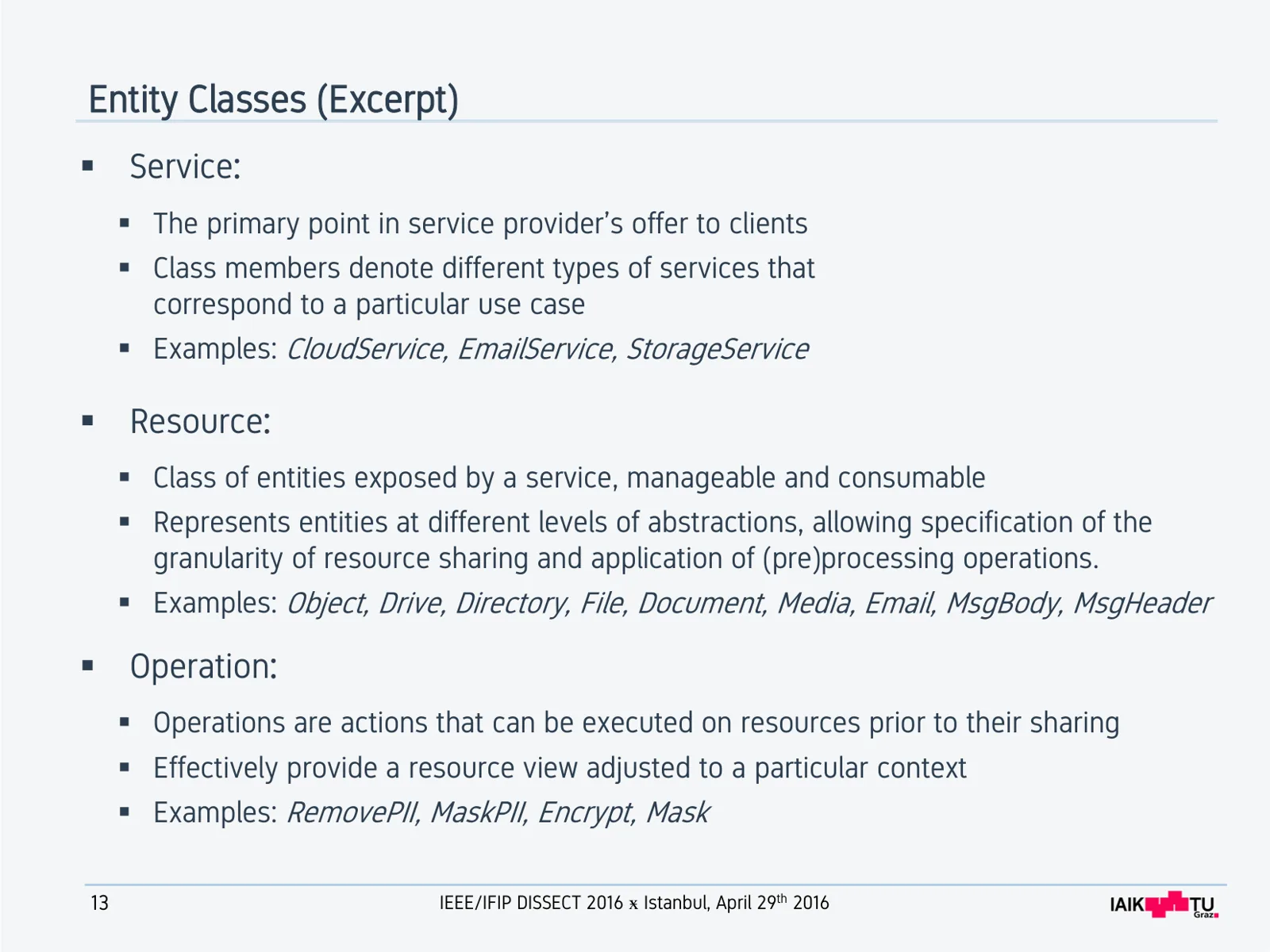
The architecture and relevant first results of ongoing work were presented in the scope of DISSECT Workshop at IEEE/IFIP NOMS Conference. The proposed approach addresses the security management of API-based interactions. The prospects of service providers, clients and data owners are taken into consideration to enable the contextual dependence in API-based data exchanges, as well as to support the granularity and interoperability in security management.
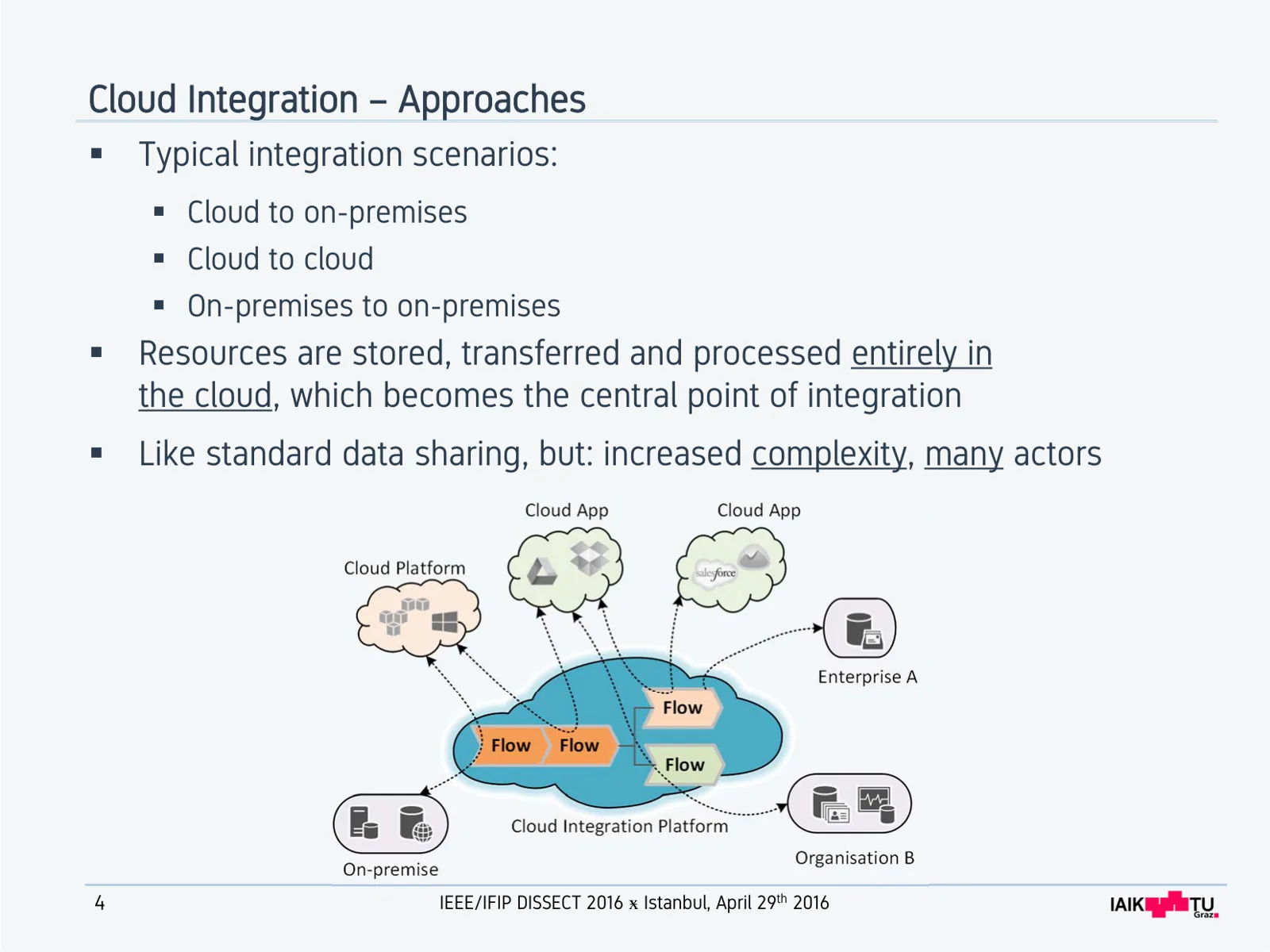
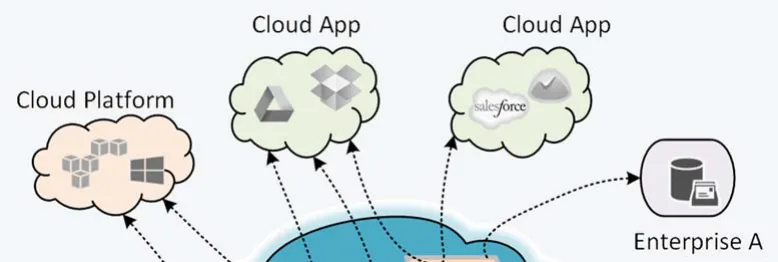
Bojan Suzic Graz University of Technology, Austria This work has been supported partially by the SUNFISH project (N.644666) funded by the European Commission H2020 Program Overview Cloud Integration – Introduction and Approaches API-based Integration: Use Case, Protocols, Practice Proposed Approach Integration in the Workflow Discussion Summary and Further Work 2 IEEE/IFIP DISSECT 2016 ӿ Istanbul, April 29 [th] 2016
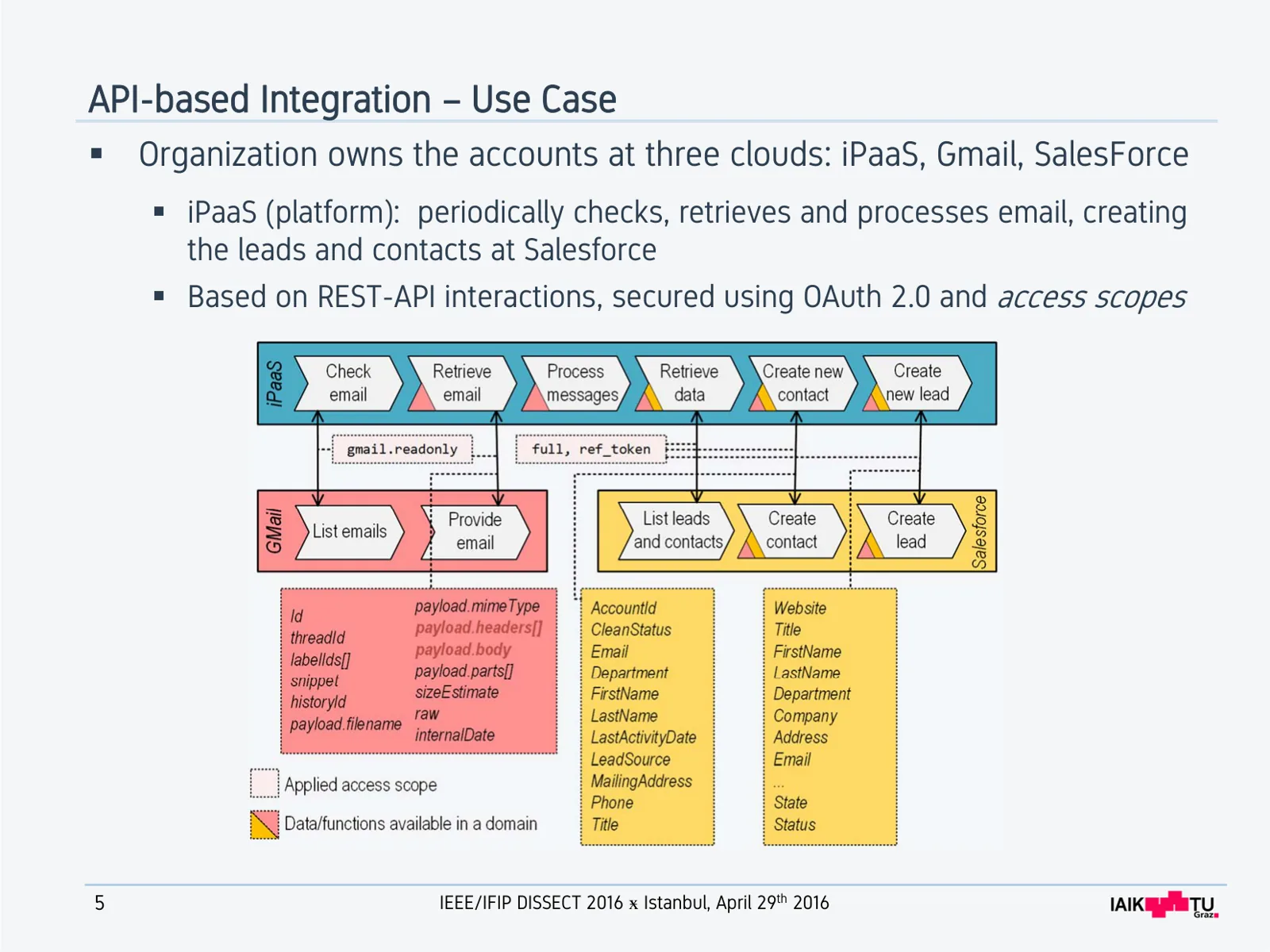
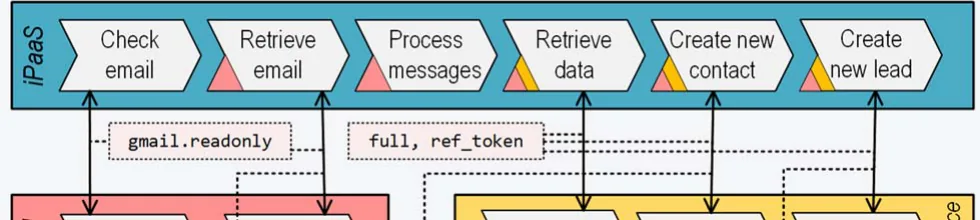
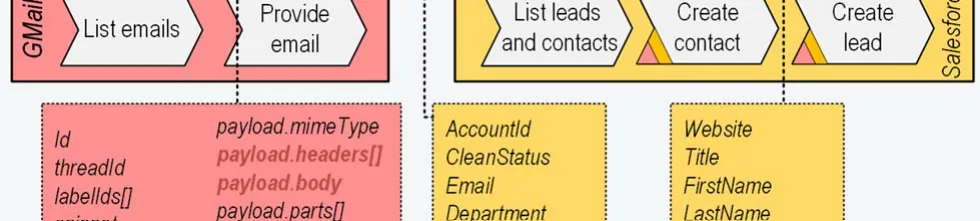
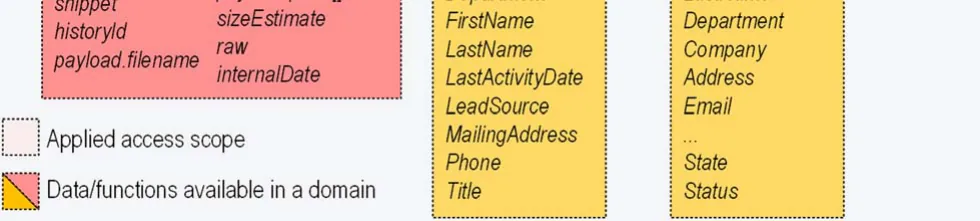
API-based Integration – Use Case
-
Authorization scope : abstract term, non-structured, out-of-the-band, opaque
-
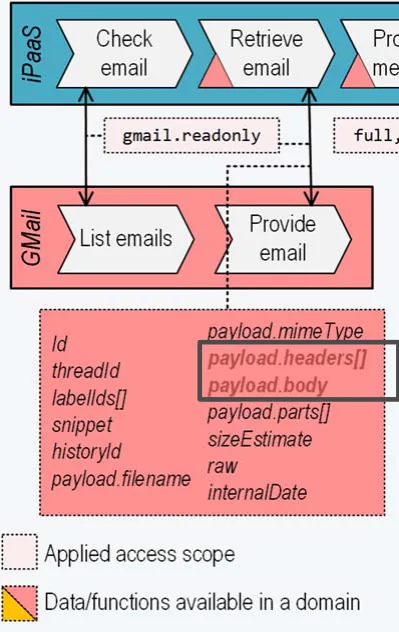
Gmail: supports a limited set of static scopes
-
Able to read all emails and metadata in an account
-
There is no specialized view, data filtering, limitation on fields…
| Scope | Meaning |
|---|---|
| gmail.readonly | Read all resources and their meta-data |
| gmail.compose | Create, read, update and delete drafts, including sending of messages and drafts |
| gmail.send | Sending of messages, without read or update privileges |
| gmail.insert | Inserting and importing messages |
| gmail.labels | CRUD of labels |
| gmail.modify | All R/W operations except perm. deletion of threads and messages |
| https://mail.google.com/ | Full access to the account |
6 IEEE/IFIP DISSECT 2016 ӿ Istanbul, April 29 [th] 2016
API-based Integration – Use Case
-
Authorization scope : abstract term, non-structured, out-of-the-band, opaque
-
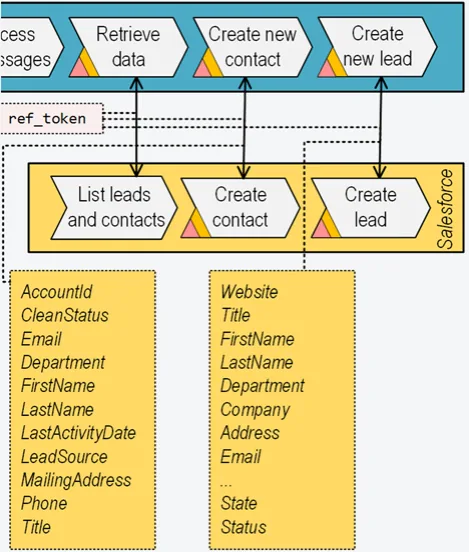
Salesforce: in many cases full scope required
-
Able to perform a broad set of operations well beyond the required use case
-
Coarse-grained scopes - Least privilege principle?
| Scope | Meaning |
|---|---|
| api | Access to user’s account using API. Encompasses chatter_api scope |
| chatter_api | Access to Chatter API resources |
| custom_permissions | Access to the custom permissions in a client-associated organization |
| full | Full data available to the user. Encompasses all other scopes |
| id | Access to the identity URL service |
| openid | Unique identifier of user in OpenID Connected applications. Can be used to retrieve token conforming to OIDC specifications |
| refresh_token | Allows provision of refresh tokens to eligible users, enabling the client to interact with the resource in offline mode. |
| visualforce | Provides access to Visualforce |
| web | Allows to use the token on the web, incl. access to Visualforce pages |
7 IEEE/IFIP DISSECT 2016 ӿ Istanbul, April 29 [th] 2016
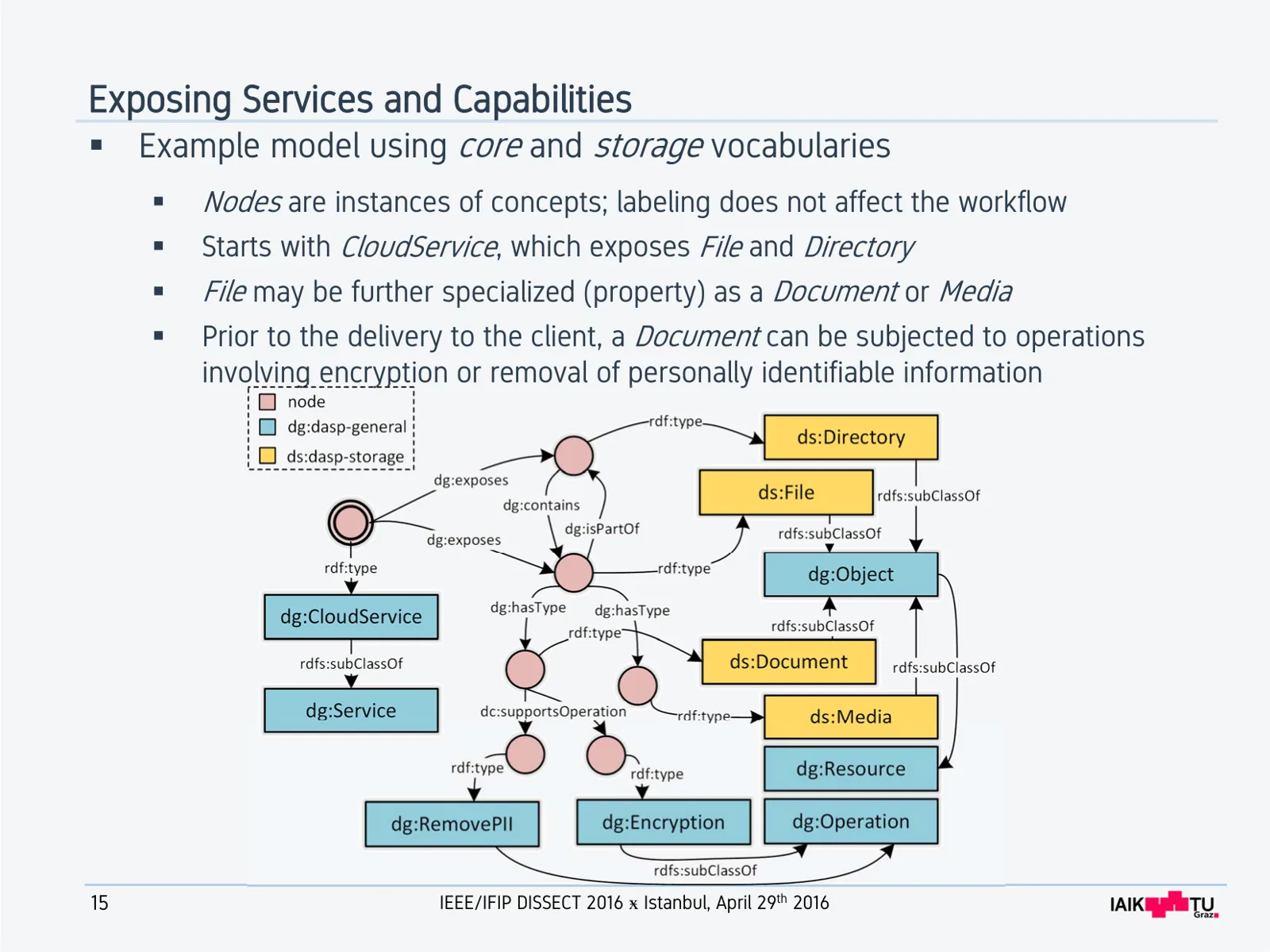
Object Properties (Excerpt) Connect entity instances of different concepts, establishing relations Behavioral and constitutional
| mples: | Col2 |
|---|---|
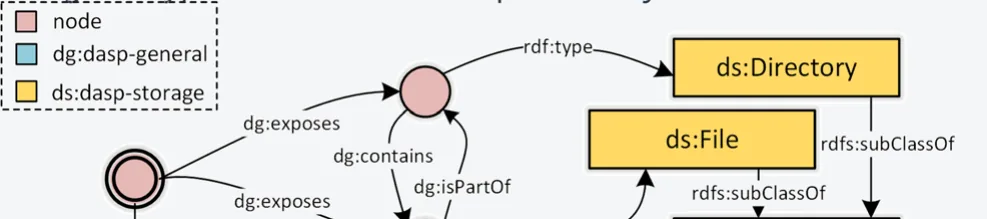
| exposes | Entity that service exposes to clients using web API |
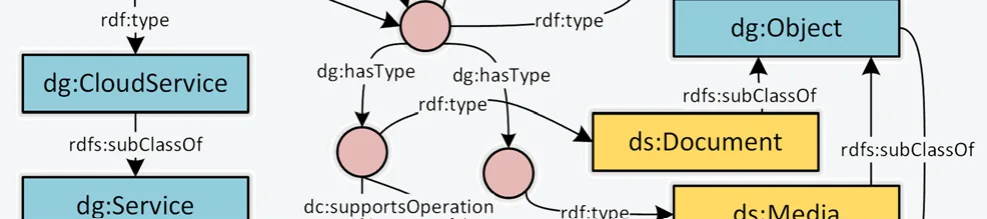
| contains, isPartOf | Relationships between entities stating constitutive (hierarchical) relationship between instances |
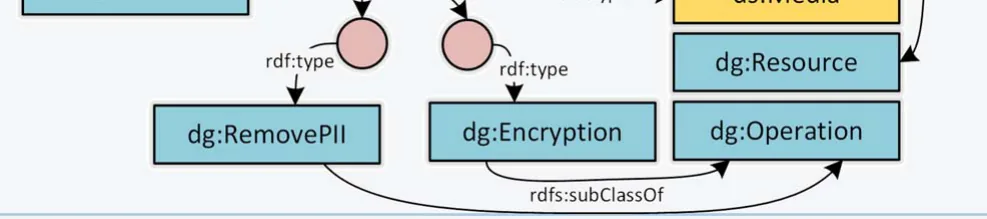
| subClassOf | An abstract description of possible inter-class relations |
| type | Class type of particular entity instance |
| hasType | Supported class specialization for exposed resources |
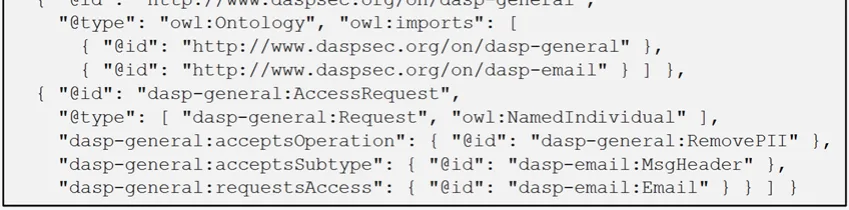
| requestsAccess | Used to relate an access requests with a service |
| supportsOperation | Denotes operations that can be executed on entity |
| acceptsOperation | Denotes operations that are accepted by the client |
| acceptsSubtype | Subtype of resources satisfying a client request |
14 IEEE/IFIP DISSECT 2016 ӿ Istanbul, April 29 [th] 2016
![[Platzhalter: Alt-Text]](/en/publications/managing-security-of-api-based-integration-workflows/abbildung-1.webp)
![[Platzhalter: Alt-Text]](/en/publications/managing-security-of-api-based-integration-workflows/abbildung-2.webp)
![[Platzhalter: Alt-Text]](/en/publications/managing-security-of-api-based-integration-workflows/abbildung-3.webp)
![[Platzhalter: Alt-Text]](/en/publications/managing-security-of-api-based-integration-workflows/abbildung-4.webp)
![[Platzhalter: Alt-Text]](/en/publications/managing-security-of-api-based-integration-workflows/abbildung-5.webp)
![[Platzhalter: Alt-Text]](/en/publications/managing-security-of-api-based-integration-workflows/abbildung-6.webp)
![[Platzhalter: Alt-Text]](/en/publications/managing-security-of-api-based-integration-workflows/abbildung-7.webp)
![[Platzhalter: Alt-Text]](/en/publications/managing-security-of-api-based-integration-workflows/abbildung-8.webp)
![[Platzhalter: Alt-Text]](/en/publications/managing-security-of-api-based-integration-workflows/abbildung-9.webp)
![[Platzhalter: Alt-Text]](/en/publications/managing-security-of-api-based-integration-workflows/abbildung-10.webp)
![[Platzhalter: Alt-Text]](/en/publications/managing-security-of-api-based-integration-workflows/abbildung-11.webp)
![[Platzhalter: Alt-Text]](/en/publications/managing-security-of-api-based-integration-workflows/abbildung-12.webp)
![[Platzhalter: Alt-Text]](/en/publications/managing-security-of-api-based-integration-workflows/abbildung-13.webp)
![[Platzhalter: Alt-Text]](/en/publications/managing-security-of-api-based-integration-workflows/abbildung-14.webp)
![[Platzhalter: Alt-Text]](/en/publications/managing-security-of-api-based-integration-workflows/abbildung-15.webp)
![[Platzhalter: Alt-Text]](/en/publications/managing-security-of-api-based-integration-workflows/abbildung-16.webp)
![[Platzhalter: Alt-Text]](/en/publications/managing-security-of-api-based-integration-workflows/abbildung-17.webp)
![[Platzhalter: Alt-Text]](/en/publications/managing-security-of-api-based-integration-workflows/abbildung-18.webp)
![[Platzhalter: Alt-Text]](/en/publications/managing-security-of-api-based-integration-workflows/abbildung-19.webp)
![[Platzhalter: Alt-Text]](/en/publications/managing-security-of-api-based-integration-workflows/abbildung-20.webp)
![[Platzhalter: Alt-Text]](/en/publications/managing-security-of-api-based-integration-workflows/abbildung-21.webp)
![[Platzhalter: Alt-Text]](/en/publications/managing-security-of-api-based-integration-workflows/abbildung-22.webp)
![[Platzhalter: Alt-Text]](/en/publications/managing-security-of-api-based-integration-workflows/abbildung-23.webp)
![[Platzhalter: Alt-Text]](/en/publications/managing-security-of-api-based-integration-workflows/abbildung-24.webp)
![[Platzhalter: Alt-Text]](/en/publications/managing-security-of-api-based-integration-workflows/abbildung-25.webp)
![[Platzhalter: Alt-Text]](/en/publications/managing-security-of-api-based-integration-workflows/abbildung-26.webp)
![[Platzhalter: Alt-Text]](/en/publications/managing-security-of-api-based-integration-workflows/abbildung-27.webp)
![[Platzhalter: Alt-Text]](/en/publications/managing-security-of-api-based-integration-workflows/abbildung-28.webp)
![[Platzhalter: Alt-Text]](/en/publications/managing-security-of-api-based-integration-workflows/abbildung-29.webp)
![[Platzhalter: Alt-Text]](/en/publications/managing-security-of-api-based-integration-workflows/abbildung-30.webp)
![[Platzhalter: Alt-Text]](/en/publications/managing-security-of-api-based-integration-workflows/abbildung-31.webp)
![[Platzhalter: Alt-Text]](/en/publications/managing-security-of-api-based-integration-workflows/abbildung-32.webp)
![[Platzhalter: Alt-Text]](/en/publications/managing-security-of-api-based-integration-workflows/abbildung-33.webp)
![[Platzhalter: Alt-Text]](/en/publications/managing-security-of-api-based-integration-workflows/abbildung-34.webp)
![[Platzhalter: Alt-Text]](/en/publications/managing-security-of-api-based-integration-workflows/abbildung-35.webp)
![[Platzhalter: Alt-Text]](/en/publications/managing-security-of-api-based-integration-workflows/abbildung-36.webp)
![[Platzhalter: Alt-Text]](/en/publications/managing-security-of-api-based-integration-workflows/abbildung-37.webp)
![[Platzhalter: Alt-Text]](/en/publications/managing-security-of-api-based-integration-workflows/abbildung-38.webp)
![[Platzhalter: Alt-Text]](/en/publications/managing-security-of-api-based-integration-workflows/abbildung-39.webp)
![[Platzhalter: Alt-Text]](/en/publications/managing-security-of-api-based-integration-workflows/abbildung-40.webp)
![[Platzhalter: Alt-Text]](/en/publications/managing-security-of-api-based-integration-workflows/abbildung-41.webp)
![[Platzhalter: Alt-Text]](/en/publications/managing-security-of-api-based-integration-workflows/abbildung-42.webp)
![[Platzhalter: Alt-Text]](/en/publications/managing-security-of-api-based-integration-workflows/abbildung-43.webp)
![[Platzhalter: Alt-Text]](/en/publications/managing-security-of-api-based-integration-workflows/abbildung-44.webp)
![[Platzhalter: Alt-Text]](/en/publications/managing-security-of-api-based-integration-workflows/abbildung-45.webp)
![[Platzhalter: Alt-Text]](/en/publications/managing-security-of-api-based-integration-workflows/abbildung-46.webp)